

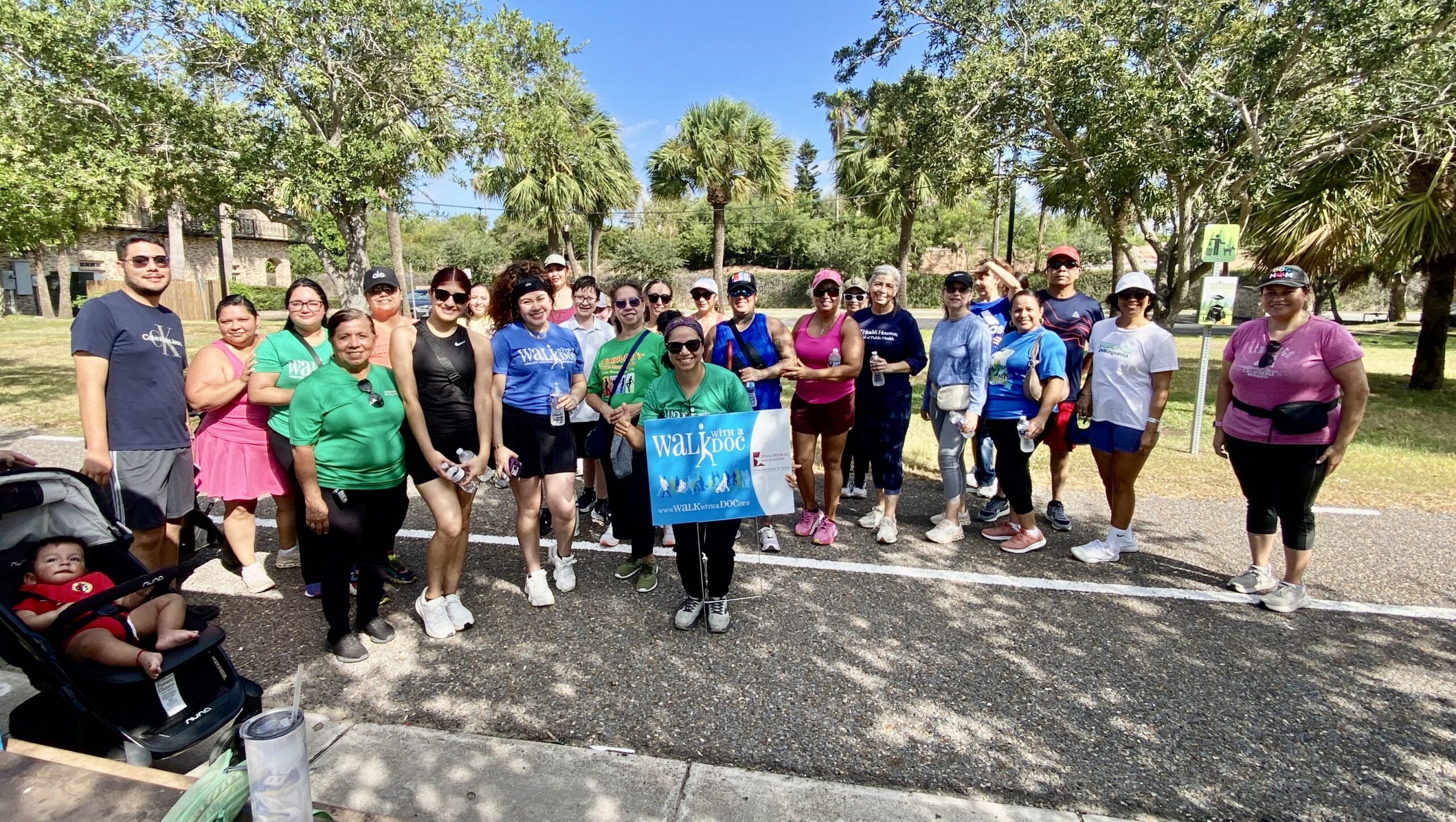
Good morning!
We were with friends the other night when a couple of cardiology questions came up, and it reminded me how similar (and confusing) some of these terms can be.
At Walk with a Doc, we want to keep our Walk family members as informed as possible, so this seemed like the perfect chance to introduce (or review) some common heart-related terms.
As always, remember: if you’re already walking 150 minutes or more each week, most of what follows may be more for your curiosity than your concern. Why? Because you’re already doing one of the most powerful things you can do to reduce the risk factors listed below.
Physical Activity = Miracle Drug = Fountain of Youth
FAQs (We love this stuff)
Risk factors come in two categories: modifiable and non-modifiable.
Modifiable risk factors (can be influenced by lifestyle or medical treatment):
- Smoking
- High blood pressure
- High LDL (“bad” cholesterol)
- Low HDL (“good” cholesterol)
- Diabetes
- Physical inactivity
- Overweight or obesity
- Poor diet
- Sleep apnea
Non-modifiable risk factors:
- Age
- Family history
- Sex
- Ethnicity
Some terms you should know:
1. Heart cath / angiogram / cardiac catheterization
These are all the same thing, a diagnostic test, meaning we’re just “taking a look.” A thin catheter is threaded over a wire and introduced into the body, typically through the radial artery at the wrist (roughly 95% of cases) or the femoral artery in the groin.
2. Stents
Often compared to the spring inside a ballpoint pen, stents are tiny mesh scaffolds placed inside blood vessels. They press plaque (atherosclerosis) against the vessel wall, opening a path for blood to flow more freely.
3. So what’s a balloon?
Great question. If the catheter reveals a blockage after contrast dye is injected, the diagnostic catheter is swapped out for one carrying a tiny balloon. Guided by fluoroscopy (real-time X-ray), the balloon is positioned at the blockage and inflated to compress the plaque.
Before 1994, when stents were introduced, this balloon-only approach was all we had, and it didn’t work that well. Re-narrowing (restenosis) occurred in up to 40% of cases. Bare-metal stents brought that down to about 20%, and modern drug-eluting stents (DES) dropped it further to under 5%. In rare situations where a stent isn’t used, the procedure is called POBA, or Plain Old Balloon Angioplasty.
4. What’s an angioplasty?
This is the therapeutic procedure, meaning we’re fixing the problem.
- Angiogram = diagnosis (taking a look)
- Angioplasty = treatment (using a balloon, or a balloon and stent)
Other terms that mean the same thing: PCI (Percutaneous Coronary Intervention) and PTCA (Percutaneous Transluminal Coronary Angioplasty).
5. What’s the recovery like after a stent?
Usually pretty quick. Most patients are up and walking shortly after the procedure. Your doctor will typically prescribe a blood thinner (in addition to aspirin) for 6 to 12 months afterward, depending on the clinical situation.
6. Heart attack / myocardial infarction / MI / “had a coronary”
All of these describe the same event: a coronary artery, one of the vessels supplying blood to the heart muscle, becomes blocked. Blood can’t get through, the heart muscle downstream is starved of oxygen, and that tissue dies.
7. Does that part of the heart come back?
Rarely. It typically turns into scar tissue.
However, the body sometimes develops collateral vessels, sometimes called “God’s bypasses.” When part of the heart is starved for oxygen, the body can release VEGF (vascular endothelial growth factor), which stimulates the growth of new blood vessels. It’s a remarkable process that can prevent or limit the size of a heart attack.
8. Where can I buy VEGF? I’d like some.
You “buy” it at Walk with a Doc, my friend. VEGF is released in higher amounts when you walk or exercise. You’re making your own heart-saving medicine just by moving.
We hope this sparks some good questions. If you have one, bring it up with your doctor. If there’s no WWAD chapter near you, feel free to reply to this email. We’ll answer the most common questions in next week’s newsletter.
You are incredible.
Stay Hungry. Stay Foolish. Please Stay Hydrated (it’s hot).
David
P.S. If you happen to be in Central Ohio tomorrow at 2 PM, we’d love to see you at Read with a Doc! You can register at the link or just show up. It’s going to be great, and you’ll always be able to say, “I was in the room where it happened.”
Disclaimer: This newsletter is for informational purposes only and is not a substitute for professional medical advice, diagnosis, or treatment. Always talk to your doctor about any questions or concerns related to your health.
David Sabgir, MD, FACC
Cardiologist and Founder/CEO of Walk with a Doc
About Walk with a Doc:
As an international non-profit organization, Walk with a Doc is committed to inspiring communities through movement and conversation with walking groups led by local doctors, healthcare providers, or medical students.
Started in 2005 by Dr. David Sabgir, a cardiologist in Columbus, Ohio, the program now extends to hundreds of communities throughout the world. The walks are a fun, free, and safe place to get physical activity, learn tips for healthy living, and meet new people.
Learn more at www.walkwithadoc.org